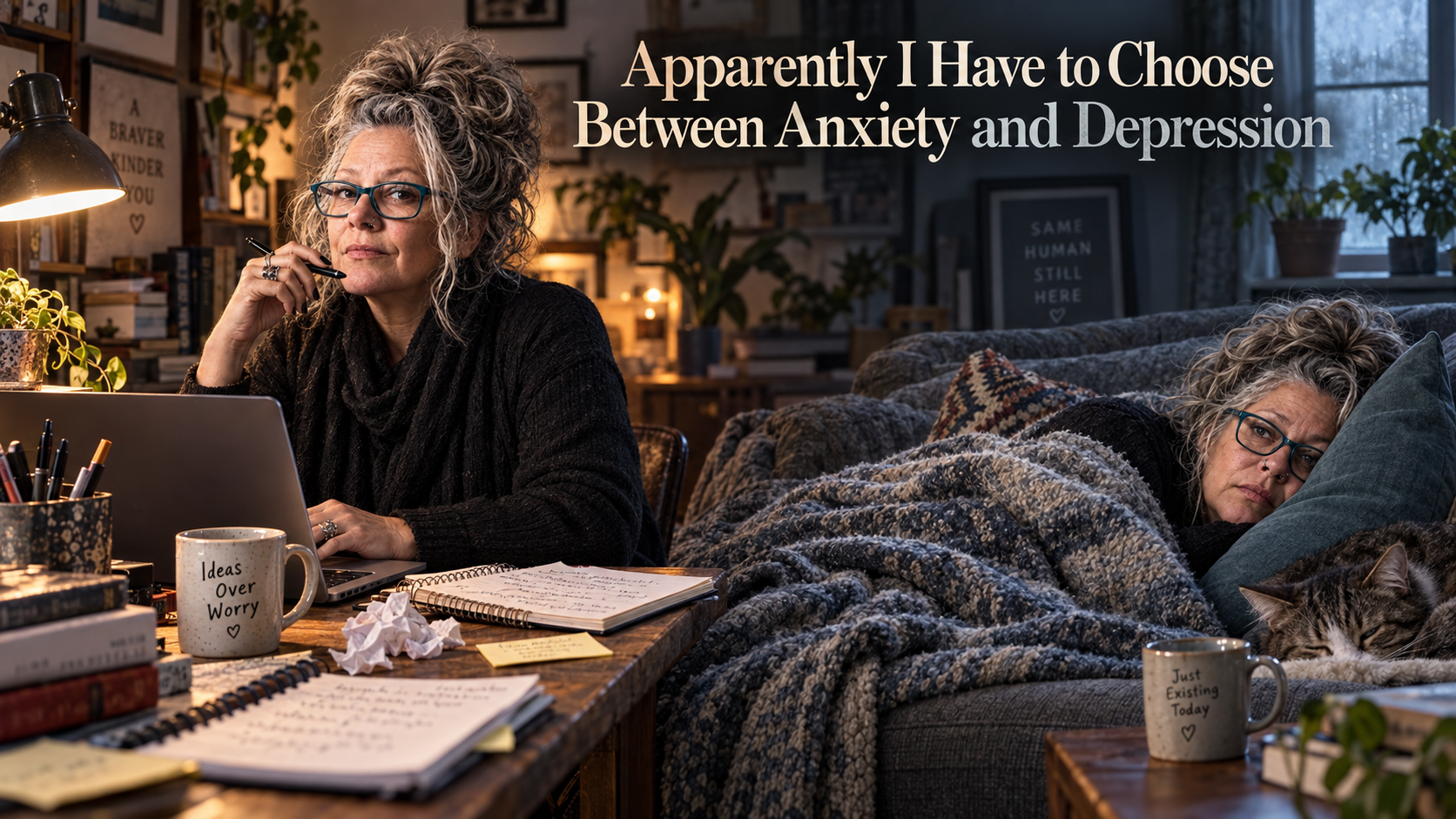
Mental health would be much easier if you only had one thing wrong at a time. One problem, one symptom, one tablet. Job done.
Unfortunately, my brain appears to have gone for the multi-buy offer: anxiety, depression, trauma, overthinking and a nervous system that behaves as though something is chasing me through a forest.
Calm the Anxiety. Wake the Depression.
Recently, medication helped calm my anxiety. There was less shaking, less flapping and less feeling as though something terrible was about to happen because a cupboard door shut too loudly.
Brilliant. Except my mood then dropped. I felt flat, numb and completely uninterested in things that would normally excite me.
I am usually interested in seventeen things before breakfast, so when that disappeared, I noticed.
The Mental Health Juggling Act
This is the annoying part of having more than one mental health problem. You are rarely treating one tidy little condition on its own.
Calm the anxiety and the depression can become louder. Ease off and anxiety comes bouncing back through the door shouting, HELLO. MISSED ME?
So which is better: calm but miserable, or anxious but alive, interested and moving?
Neither is exactly the luxury package.
The Bit I Had to Learn
The biggest thing I learned is that one symptom improving does not automatically mean you are improving overall.
If your anxiety is calmer, that is good—but look at the rest of you too. Are you still getting up, laughing, enjoying things, making plans and feeling emotionally present?
Sometimes treatment can make you quieter without actually making you better. That is an important difference.
Depression Is Not Something I Want to Gamble With
I can joke about most things, but depression deserves respect. Feeling numb and losing interest in life is not something I want to ignore simply because my anxiety happens to be quieter.
Depression can become dangerous. When I realised I no longer felt like myself, I knew the balance needed reviewing.
Medication changes should always be discussed with whoever prescribes them, especially if your mood changes significantly. The aim is not merely to silence symptoms—it is to help you remain safe, functional and present in your own life.
My Highly Scientific Choice
My brain basically offered me two options.
I could be alive, active, enthusiastic, shaky, flappy and occasionally frightened by absolutely nothing. Or I could be calm, depressed and slowly regaining the cauliflower ear I nearly developed from lying on one side, sulking and watching television.
At one point, I was on the sofa so much that one ear was practically being ironed flat. There are probably more glamorous warning signs that your mental health treatment needs reviewing, but mine was essentially:
My personality has disappeared and my ear hurts.
Better Does Not Always Mean Quieter
Obviously, I would prefer not to have anxiety. I would also prefer my nervous system not to behave like a faulty burglar alarm that goes off because somebody breathed near it.
But I would rather learn to manage some anxiety than lose the part of me that wants to write, research, laugh, create and generally interfere with the universe.
Better does not always mean completely calm. Sometimes better means safe, functioning, interested and still recognisably you.
I Choose Alive
If I genuinely have to choose between being anxious and being emotionally flattened, I know which direction I want to move in.
I choose alive, interested and involved in my own life. I will take shaky, flappy and occasionally resembling a startled pigeon over slowly disappearing into the sofa.
Obviously, I would quite like the eventual treatment plan to include neither anxiety nor depression. That would be lovely, thank you very much.
But mental health is rarely that tidy. Sometimes the goal is to find the balance where you can function, feel things and still recognise yourself.
And occasionally check your ear.
Because if it is beginning to resemble a vegetable, you may have been lying down for too long.
Think someone could use this?
If this made you think of someone, share it with them. Sometimes the right words find people at exactly the right time.

Read further
The Girl Who Split To Survive
A raw memoir about trauma, survival and the extraordinary ways a mind learns to protect itself—even when those protections later become problems of their own.
View on Amazon UKStay for another one