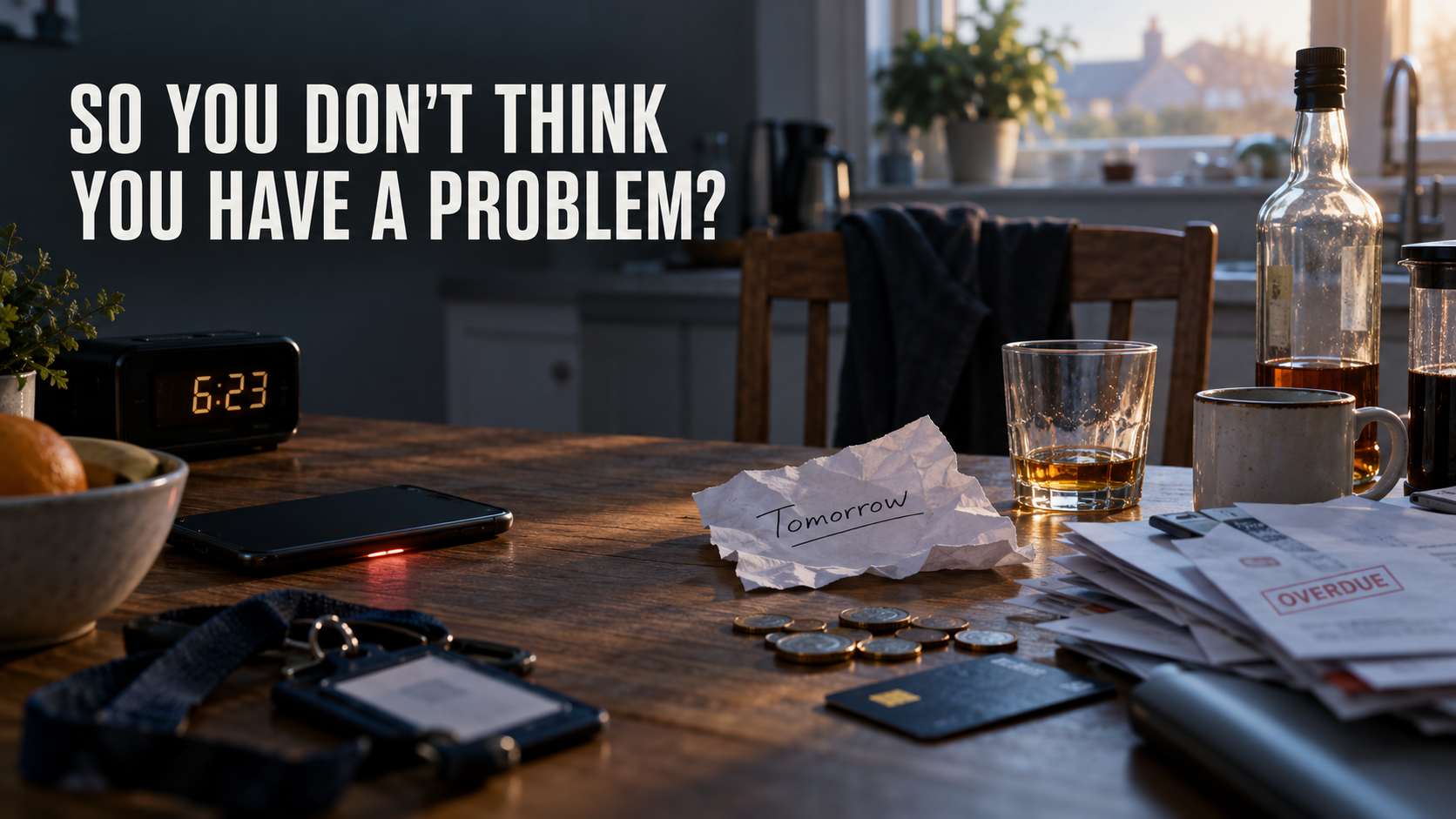
Nobody likes being told they may have a problem.
The moment somebody questions our drinking, drug use, gambling or whatever else we are clinging to, the defence barrister in our head leaps to its feet.
Objection! I can explain everything.
And explain it we do.
We explain the money.
We explain the rows.
We explain the missed work, the terrible sleep, the forgotten conversations and the promises we keep breaking.
Every individual disaster has its own perfectly reasonable excuse.
It is only when you put the whole bloody lot together that the picture becomes harder to ignore.
So, you don't think you have a problem?
Okay then.
Let's see.
First, Let's Hear the Excuses
Do any of these sound familiar?
- I don’t do it every day.
- I only do it at weekends.
- I never touch it before a certain time.
- I still go to work.
- I pay my bills.
- I look after my children.
- I only drink beer or wine.
- I only use it socially.
- It is prescribed, so it cannot be a problem.
- Everybody I know does it.
- I work hard. I deserve it.
- I have had a stressful week.
- I need it to relax.
- I need it to sleep.
- I need it to feel normal.
- I am not as bad as that person.
- I have never been arrested.
- I have never lost my home.
- I can stop whenever I want.
- I have stopped before.
- I am cutting down next week.
- This is the last time.
- People are exaggerating.
- My partner is just controlling.
- My family always has a go at me.
- Nobody understands what I have been through.
- I am only hurting myself.
- I am still functioning.
That last one is a favourite.
Functioning is not the same as living well.
You can go to work, answer messages, feed the dog and put the bins out while your life quietly collapses behind the scenes. Addiction does not require you to live under a bridge before it qualifies as a problem.
And comparing yourself with somebody worse is pointless. There will nearly always be somebody worse.
That does not make you fine.
It only makes them worse.
The Honest Addiction Checklist
This is not a medical test or a diagnosis. There is no magic score that can tell your whole story.
It is simply a way of putting all the scattered evidence in one place.
Think about the last twelve months. Give yourself one point for every statement that is true, even if it only happened once.
No clever explanations. No “yes, but…” Just yes or no.
Control and Obsession
- I have used more, drunk more, spent more or carried on longer than I intended.
- I have promised myself I would cut down or stop and then failed to do it.
- I spend a lot of time thinking about when I can next do it.
- Once I start, I find it difficult to stop.
- I arrange parts of my day around it.
Relationships
- My partner, family or friends have complained or expressed concern.
- I have lied, hidden things or deliberately left out details.
- I have started rows, said cruel things or behaved differently while under the influence or chasing the next fix.
- People close to me trust me less than they used to.
- I have chosen the addiction over time with somebody I care about.
Money
- I have spent money I could not comfortably afford.
- I have borrowed money, used credit or dipped into money meant for something else.
- I have lied about how much I spent.
- I have worried about money and still found money for the addiction.
- My use has contributed to missed bills, debt or financial arguments.
Work and Responsibilities
- I have been late, absent, unreliable or less productive because of it or the recovery afterwards.
- I have cancelled plans or neglected jobs that needed doing.
- I have made mistakes because I was using, recovering, distracted or exhausted.
- I have told lies to cover my absence, behaviour or poor performance.
- Important parts of my life receive whatever energy is left over.
Sleep and Daily Life
- I use it to get to sleep, stay awake, calm down or feel normal.
- My sleep is broken, poor-quality or controlled by using and recovering.
- I regularly wake feeling anxious, ashamed, ill, exhausted or confused.
- I lose chunks of the next day to hangovers, comedowns, cravings or regret.
- My basic routines—eating, washing, cleaning or leaving the house—have suffered.
Body and Mind
- I need more than I used to in order to get the same effect.
- I feel shaky, sweaty, sick, anxious, agitated or unwell when I stop or cut down.
- My anxiety, depression, anger, paranoia or mood swings have become worse.
- I have had blackouts, memory gaps, injuries or frightening physical symptoms.
- I have continued despite knowing it is harming my physical or mental health.
Secrecy, Shame and Damage Control
- I hide evidence, delete messages, disguise smells, move money or cover my tracks.
- I avoid certain people because they might notice or ask questions.
- I have apologised for the same type of behaviour more than once.
- I feel guilt, shame or dread afterwards but eventually do it again.
- I spend time repairing damage caused by something I insist is not a problem.
Risk and Loss
- I have driven, cared for somebody, gone to work or made important decisions when I was not properly capable.
- I have put myself or another person in an unsafe situation.
- I have lost a relationship, friendship, opportunity, job or important possession because of it.
- I have done things that go against my own values.
- Deep down, I have already wondered whether I have a problem.
Look at the Pattern, Not a Score
These questions are my own reflection prompts, not a validated screening questionnaire. There are no clinical cut-offs here. Counting a handful of answers cannot tell you whether you have an addiction, how severe it is or what treatment you need.
Instead, notice what you have written down. Which consequences keep returning? What are you hiding, minimising or promising to change? A concern about withdrawal, driving impaired or somebody being frightened matters on its own, whatever the rest of the page looks like.
If the questions raise concerns, take those examples to your GP or a qualified alcohol or drug service. The NHS guide to alcohol-use disorder explains recognised signs and how assessment works. For an established drinking self-check, it also links to Alcohol Change UK.
The point is an honest conversation, not awarding yourself a pass or a fail.
Updated 24 October 2026: informal scoring bands removed to make clear that this is a personal reflection checklist, not a diagnostic test.
But I Can Stop Whenever I Want
All right.
Then stop.
Not as a dramatic declaration made during a hangover. Not “after the weekend,” “once work calms down” or “when this bottle is gone.”
Make a safe plan and ask for support.
Then pay attention to what happens inside your head when you imagine actually doing it.
Does your mind immediately start negotiating?
Does it offer you one last blowout?
Does it suddenly produce seventeen excellent reasons why now is an inconvenient time?
That negotiation is information.
I spent a long time believing my own explanations. I could account for every incident separately and still avoid admitting what they added up to.
Getting sober began when I stopped asking, “Can I prove I'm not as bad as somebody else?” and started asking, “What is this doing to my life?”
That was the question that mattered.
You Do Not Have to Lose Everything
People sometimes imagine they must reach a spectacular rock bottom before they are entitled to ask for help.
You do not.
Rock bottom is simply the point where you stop digging.
You are allowed to stop while you still have your job.
You are allowed to stop while your relationship can still be repaired.
You are allowed to stop before your health gets worse, before the money disappears and before the people who love you become too tired to keep rescuing you.
Admitting there is a problem does not make you weak, disgusting or broken.
It makes you honest.
And honesty is where recovery finally has something solid to stand on.
Think someone could use this?
If this made you think of someone, share it with them. Sometimes the right words find people at exactly the right time.
When Addiction Takes Everything
I wrote When Addiction Takes Everything because addiction rarely takes everything in one dramatic sweep.
It takes things bit by bit.
Money. Trust. Sleep. Health. Dignity. Relationships. Hope.
Sometimes the first step is not knowing exactly how you will recover.
It is simply being brave enough to count what the addiction is already costing you.
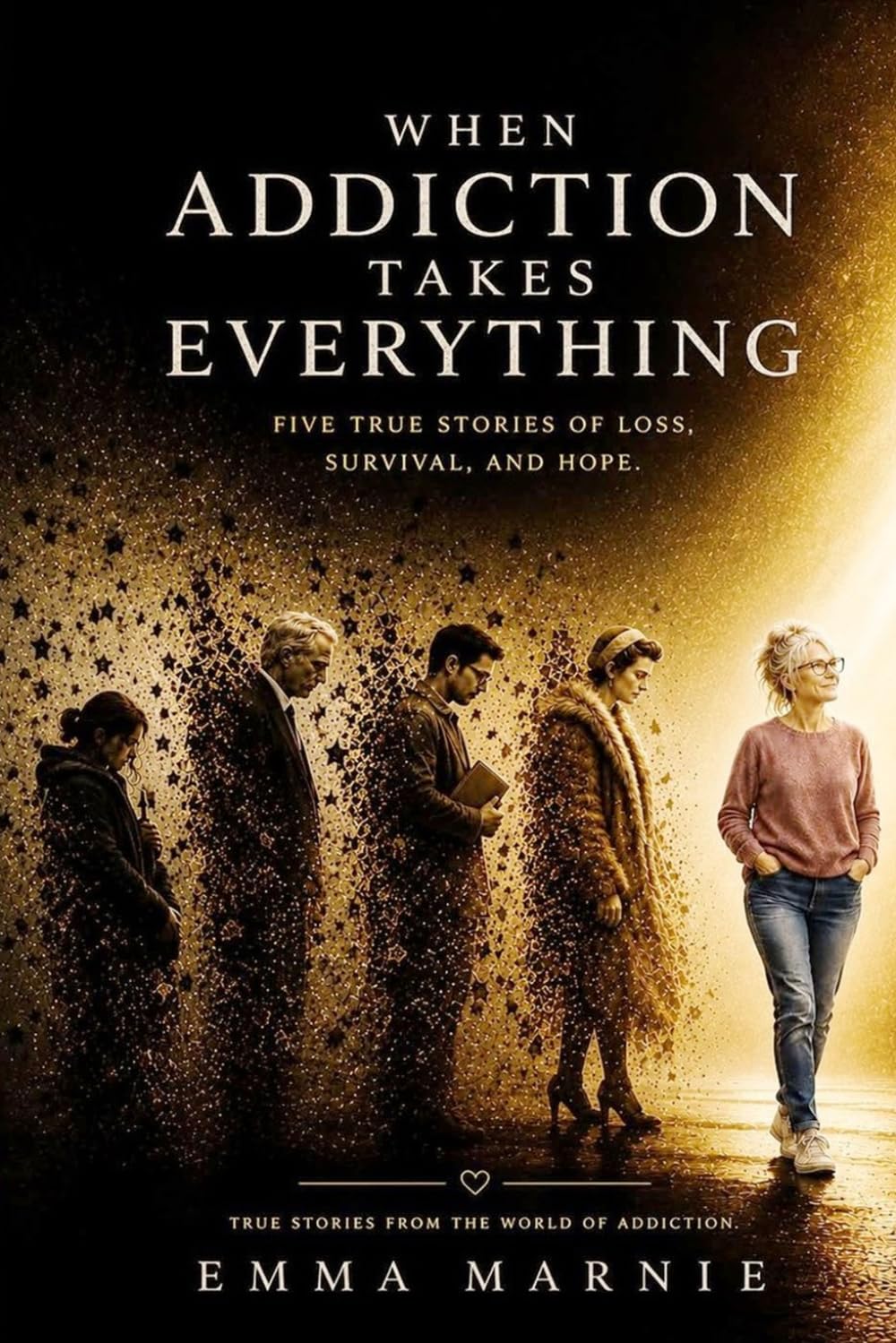
Read the full story
When Addiction Takes Everything
True stories of alcoholism, loss, survival and choosing recovery.
View the book on Amazon UKStay for another one