
I have been around recovery long enough to know that the Twelve Steps can change lives.
I also know that sometimes you can read them and think:
What the fuck does that actually mean?
Especially when you're new.
Your brain is already trying to deal with cravings, fear, shame, anxiety, possibly withdrawal, the absolute car crash you've just discovered your life has become and the horrifying possibility that people might expect you to have feelings about all this.
Then somebody hands you Twelve Steps.
Excellent.
More homework.
So I thought I'd translate them.
Not replace them.
Not improve them.
Just explain what they have come to mean to me after years of recovery, therapy, psychology and repeatedly discovering that apparently I am still capable of learning things.
And because I don't believe recovery has to be miserable, we're going to have a laugh while we're here.
The psychology bits are deliberately tiny.
I'm not trying to fix you with a blog.
I'm planting seeds.
And This Isn't Just About Addiction
The Twelve Steps aren't only useful for drinking or substance abuse. You can apply the ideas to anything you keep doing even though you know it isn't working—bad coping skills, destructive relationships, anger, avoidance, people-pleasing, or the same bloody behaviour on repeat.
Different problem. Surprisingly similar process:
Notice it. Face it. Change it. Practise.
Right. Enough sensible stuff.
Let's translate the Twelve Steps into human.
Step 1 — Oh Shit
The basic idea: Recognise that the addiction—or whatever pattern you’re stuck in—has taken control and what you’re doing isn’t working anymore.
My Translation
Shit. I actually have a problem here and I have no idea what to do with it.
Shit, shit, shit.
Panic and do more of the thing because that covers up the fact that it's all shit.
Tiny Bit of Psychology
This is awareness.
You can't change something while you're still convincing yourself it isn't happening.
Unfortunately, noticing it can initially make you want to run straight back to the thing you've been using to avoid noticing it.
Welcome to the ridiculousness of the human brain.
Step 2 — Maybe Someone Knows What the Hell to Do
The basic idea: Accept that help exists and that perhaps you don’t have to solve this entirely by yourself.
My Translation
Hmm. I wonder if I can get any help with this problem. Let me look into it.
Tiny Bit of Psychology
This is the beginning of hope.
Not “Everything is going to be wonderful.”
Just:
Maybe there's another option.
That's enough for now.
Seed planted.
Step 3 — Make the Bloody Call
The basic idea: Stop merely wondering about help and actually reach towards it.
My Translation
Make the call to the problem solver and see what they can offer.
AA.
A recovery service.
A therapist.
Your GP.
Someone you trust.
Or whoever is appropriate for whatever you're dealing with.
Tiny Bit of Psychology
Thinking about changing and doing something that creates change are different things.
This is where thought starts becoming action.
Even a tiny action counts.
Step 4 — Bloody Hell, Was I Really Like That?
The basic idea: Take an honest look at yourself, your behaviour and what’s been going on underneath it.
My Translation
Holy crap. Was I really like that? OMG. No wonder I drank and was a complete dick. Not dealing with my stuff really fucked me up.
This bit isn't particularly comfortable.
Sorry.
Tiny Bit of Psychology
We're looking for patterns.
What happened?
What did I feel?
What did I do?
What kept happening again and again?
You aren't gathering evidence for a prosecution.
You're gathering information.
You need to know what you're working with.
Step 5 — Get It Out
The basic idea: Stop carrying everything secretly inside your own head and tell someone the truth.
My Translation
Talk to the person about how you've been a dick. All the small parts. All the big parts.
Dig right down into your soul and drag it out if needs be.
No more hiding.
No more denial.
Tell it all.
Tiny Bit of Psychology
Secrets and shame absolutely love isolation.
Talking honestly to a safe person can take away some of their power.
And sometimes hearing yourself say something aloud produces the slightly horrifying realisation:
Oh. I actually do that, don't I?
Yep.
There it is.
Step 6 — Put Your Coping Skills in the Washing Machine
The basic idea: Recognise which behaviours aren’t helping you anymore and become willing to change them.
My Translation
Well, I think my behaviour and usual coping skills need to be put in the washing machine because, damn, they're not working.
And I'm never going to get better if I keep repeating them.
Tiny Bit of Psychology
Some coping mechanisms probably did help you once.
Avoiding.
Shutting down.
Getting angry.
Drinking.
Running away.
Controlling everything.
Whatever yours were.
The problem comes when an old survival strategy becomes today's problem.
You don't have to hate yourself for learning it.
But you probably need a new one.
Step 7 — Activate Non-Dick Mode
The basic idea: Actually practise behaving differently.
My Translation
Start actually changing things. Like REALLY change.
Take notes on yourself every minute of the day.
Watch what you're doing.
Catch yourself.
Stop yourself.
Then:
Practice. Practice. Practice.
Until eventually it becomes:
AUTOMATIC NON-DICK MODE.
Tiny Bit of Psychology
Brains learn through repetition.
Doing something differently once is an experiment.
Doing it repeatedly is how you start building a new habit.
You'll cock it up.
Try again.
That's still practice.
Step 8 — Oh Bloody Hell, Other People Were Involved
The basic idea: Honestly recognise how your behaviour affected other people.
My Translation
Damn it. I upset so many people.
I neglected them.
I caused fear.
Some of them even hated me.
They never knew who I was going to be or what mood I'd be in.
Shit. That's awful.
I'm going to talk to those people about this and apologise.
Tiny Bit of Psychology
This is empathy.
Instead of only seeing events through your own pain, you begin seeing what they might have been like for somebody standing next to you.
That can hurt.
But it also means you're changing.
Step 9 — Sorry
The basic idea: Where it’s appropriate and won’t cause further harm, take responsibility and try to put things right.
My Translation
Very humbly say sorry.
That's it.
Not:
I'm sorry, BUT…
Not:
I'm sorry you felt…
Not a seventeen-minute explanation of why technically you weren't entirely responsible because Mercury was in retrograde and Sandra started it.
Sorry.
Tiny Bit of Psychology
A proper apology is about accountability, not making yourself feel better.
Sometimes the other person accepts it.
Sometimes they don't.
You control your behaviour.
You don't control their response.
Step 10 — Avoid Doom Town
The basic idea: Keep checking your behaviour and correct yourself when you start slipping into old patterns.
My Translation
Daily checks on how you're behaving.
If you steered off the path, it's okay.
Just get back onto the right one.
One day, the other path to DOOM TOWN will be so far away that you won't even be able to accidentally fall onto it.
Tiny Bit of Psychology
This is self-monitoring.
Not obsessively beating yourself up every time you make a mistake.
Just noticing.
Oops. Old behaviour.
Correct course.
Carry on.
The quicker you notice, the less distance you travel towards Doom Town.
Step 11 — Bloody Hell, Just Chill
The basic idea: Make space to slow down, reflect and look after the person you’re becoming.
My Translation
Chill.
Self-care.
Love yourself.
Most important.
Tiny Bit of Psychology
Your brain and body need periods when they're not fighting something.
Rest isn't laziness.
Looking after yourself isn't a reward you receive once you've finally become perfect.
You'll be waiting a bloody long time.
Step 12 — Plant Seeds
The basic idea: Use what you’ve learned to help other people while continuing to live it yourself.
My Translation
Open your ears to others.
Listen.
Notice.
Try to help.
But plant little seeds, because trying to force people never works.
Little seeds stay.
Someone might completely ignore something you tell them today.
That's okay.
Because one day they might be struggling with something and suddenly think:
Oh yeah. I remember that.
And perhaps that's the moment they realise how they can start fixing it.
Tiny Bit of Psychology
People are far more likely to make lasting changes when the motivation becomes their own.
You can't drag somebody into recovery.
You can listen.
You can share what helped you.
You can show them another path exists.
Then you leave the seed alone.
And That's My Twelve Steps
They aren't really twelve instructions for becoming some perfect enlightened human being.
I'm certainly not one.
To me, they're much more practical than that.
And the more I look at them, the more I realise they're not only about addiction.
They're a pretty decent framework for getting yourself unstuck.
Realise something is wrong.
Look for help.
Accept help.
Look honestly at yourself.
Stop hiding.
Find the behaviours that aren't working.
Practise better ones.
Recognise where you've hurt people.
Say sorry.
Keep checking yourself.
Look after yourself.
And when you're strong enough, turn around and quietly help the next person.
That's it.
You don't have to understand everything today.
You don't have to fix your entire life by Tuesday.
And somebody shouting advice at you probably isn't going to magically change you anyway.
But perhaps something you've read here will stick.
A tiny seed.
And six months from now, six years from now, or even tomorrow morning, your brain might suddenly go:
Oh yeah.
I remember that.
And maybe you'll know what to do next.
Think someone could use this?
If this made you think of someone, share it with them. Sometimes the right words find people at exactly the right time.
Read a Little Further
If you want to explore the Twelve Steps beyond my slightly sweary translation, these two books approach recovery from different sides.
A practical, secular approach
The Proactive Twelve Steps
The Proactive Twelve Steps: A Mindful Program for Lasting Change translates the Steps into clear, practical language without requiring religious belief. Serge's approach helped me understand the work behind the words and find a version my brain could actually use.
Real stories of addiction and recovery
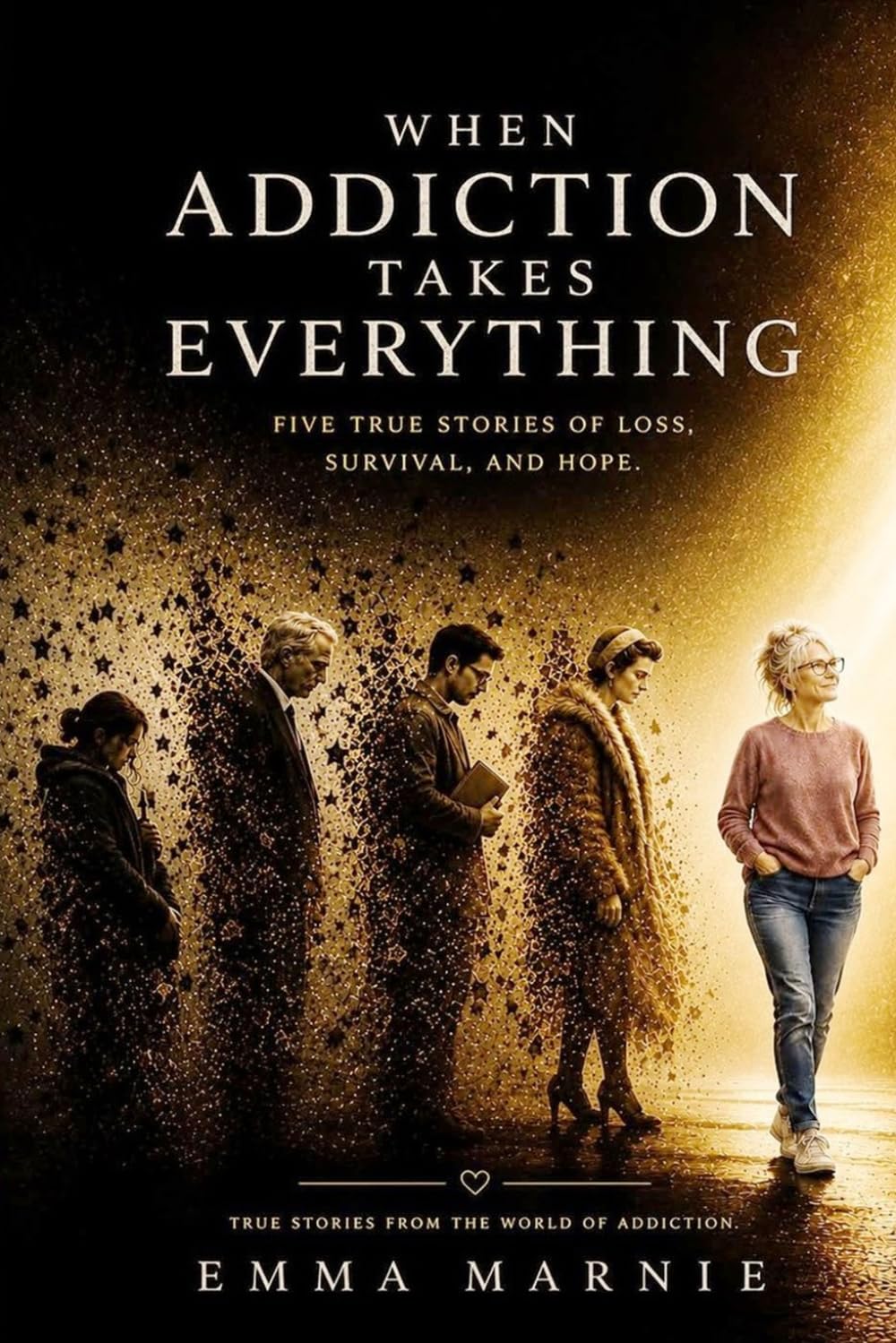
When Addiction Takes Everything
This is not a recovery manual. It is a collection of true stories about what addiction can take, what people carry beneath it and what recovery can begin to give back.
View the book on Amazon UKStay for another one