
Getting sober was hard. Killing the obsession was one of the hardest things I have ever done.
At first, alcohol occupied far too much space in my head: thinking, planning, bargaining, promising, regretting—then starting the whole ridiculous cycle again.
When that obsession finally went quiet, the silence felt unbelievable. I could live instead of constantly negotiating with myself.
But occasionally, particularly when life is being an absolute bastard, a little voice comes back.
The Short Answer
If an old urge to drink returns, treat it as a thought—not an instruction. Stop negotiating with it. Change what you are doing, make drinking inconvenient, eat or rest if you need to, contact somebody who understands and let the moment pass.
The voice returning does not erase your recovery. What matters is what you do next.
It Does Not Come Back Politely
It does not necessarily arrive saying, “Perhaps a glass of wine would be nice.”
Oh no. On a really bad day, mine can be considerably less sophisticated:
Just go and get fucked up. Forget all this bullshit life crap.
There it is. After all the work, all the lessons and every reason I stopped, one destructive thought offers what sounds—for half a second—like an escape route.
That does not mean I want my old life back. It means an old pathway in my brain once learned that alcohol was an answer.
It was a spectacularly shit answer, but I used it for a long time.
It Waits for a Bad Day
The voice is not interested in the good days. It does not bother me when I am laughing, writing or pottering around.
It prefers an entrance when everything has gone wrong at once—when I am exhausted, frightened, angry, hurt, overwhelmed or simply sick to death of being sensible.
You know what would make this disappear for a few hours.
Yes. I do.
I also know what happens afterwards.
Addiction Has a Selective Memory
That voice is a bloody liar. It remembers the first drink beautifully and becomes strangely vague about the rest.
It remembers relief but forgets consequences. It remembers numbness but misplaces the following morning.
Perhaps it should come with a warning:
Fancy a drink? Terms and conditions apply. Side effects may include wrecking everything you have spent years rebuilding.
When the thought comes, I let the whole story play—not the first twenty minutes, the whole bloody film.
I already know the ending.
A Thought Is Not an Instruction
This was quite a revelation for me.
Your brain can suggest something ridiculous, and you are under no obligation to cooperate.
Mine can tell me I need alcohol. It can tell me everyone hates me. It can remind me at three in the morning about something mildly embarrassing I said in 2004.
Clearly it cannot be trusted with unsupervised management.
I do not need a philosophical debate with the voice. I only need not to do what it says.
Move. Do Something. Anything.
When that moment hits, move. You do not need spiritual enlightenment or whale noises gently playing in the background. You need to get through this bit.
Cut the grass with scissors. Paint a wall with the tiny brush from a children's paint set. Shower. Eat. Walk around with headphones on. Ring somebody. Watch the stupidest programme you can find.
The activity does not need to be useful, impressive or worthy of Instagram. It only needs to occupy enough minutes for the moment to change.
Because moments do change.
Make Giving In Ridiculously Difficult
Sometimes willpower is useful. Sometimes willpower is knackered and needs assistance.
So help it. Do not sit staring at your shoes wondering whether to go to the shop. Take the shoes off. Put your pyjamas on at four. Make tea. Eat something. Get into bed with a terrible film.
Call somebody who knows exactly what that voice sounds like. Change your environment. Make drinking inconvenient.
You are not trying to win Most Heroic Sober Person.
You are trying not to drink today. That is enough.
Do Not Negotiate With It
The dangerous part is not always the thought. It is entertaining it.
Once negotiations begin, the little voice becomes a barrister.
You could have one. No.
You have been sober for ages. Exactly.
You have proved you can stop. Yes, which is why I do not need another fucking experiment.
Things are different now. They are—because I do not drink.
Case closed. Some arguments do not deserve a hearing.
What Are You Actually Trying to Escape?
For many of us, alcohol was never really about alcohol. It was about silence, relief, sleep, trauma, loneliness, fear or wanting our own thoughts to shut up.
When the urge appears, I ask what is actually hurting.
Maybe I need food. Maybe I need sleep. Maybe I am angry. Maybe something has hurt me. Maybe I have pretended to be fine for three weeks and my brain has finally submitted a formal complaint.
Deal with that.
Alcohol cannot fix the thing underneath. It can only postpone meeting it—usually while adding another problem to the pile.
There Is No Shame in the Thought
Recovery is not a magical brain wipe where every connection to your old behaviour is deleted.
For some people, those thoughts become rare. For others, an occasional whisper still appears years later.
The important thing is not whether the thought knocked on the door.
It is whether you let the bastard in.
I recognise mine now. I know its sales pitch, what it promises and what it leaves behind.
That makes it considerably less impressive.
Outlast the Hour
In the middle of an awful day, the brain becomes convincing about permanence: This is unbearable. Everything is fucked. Nothing will change.
But the argument ends. You sleep. The panic settles. Somebody phones. Tomorrow arrives.
The thing that felt enormous at six can look completely different by morning. But if you drink because six o'clock hurt, the consequences may remain long after the original problem has passed.
Sometimes recovery is remarkably unglamorous.
You simply outlast the hour.
Fight Like Hell for the Life You Built
There are days when staying sober is effortless. Then there are moments when an old part of my brain remembers what I once did when life hurt.
That voice does not frighten me as it once did, because now I have another voice.
Mine.
And mine has evidence.
I know what alcohol cost me and how hard I fought to get out. So if that old voice gets loud, I will get louder.
I will walk. Write. Eat. Swear. Ring somebody. I will cut the bloody lawn with nail scissors if that is what gets me through the hour.
But I will not hand my life back—not for a bad day, a bad week or because life has temporarily become unbearable.
I have already lived the alternative.
Whatever bullshit today throws at me, tomorrow I want to wake up knowing one thing:
I did not listen to the voice.
Think someone could use this?
If this made you think of someone, share it with them. Sometimes the right words find people at exactly the right time.
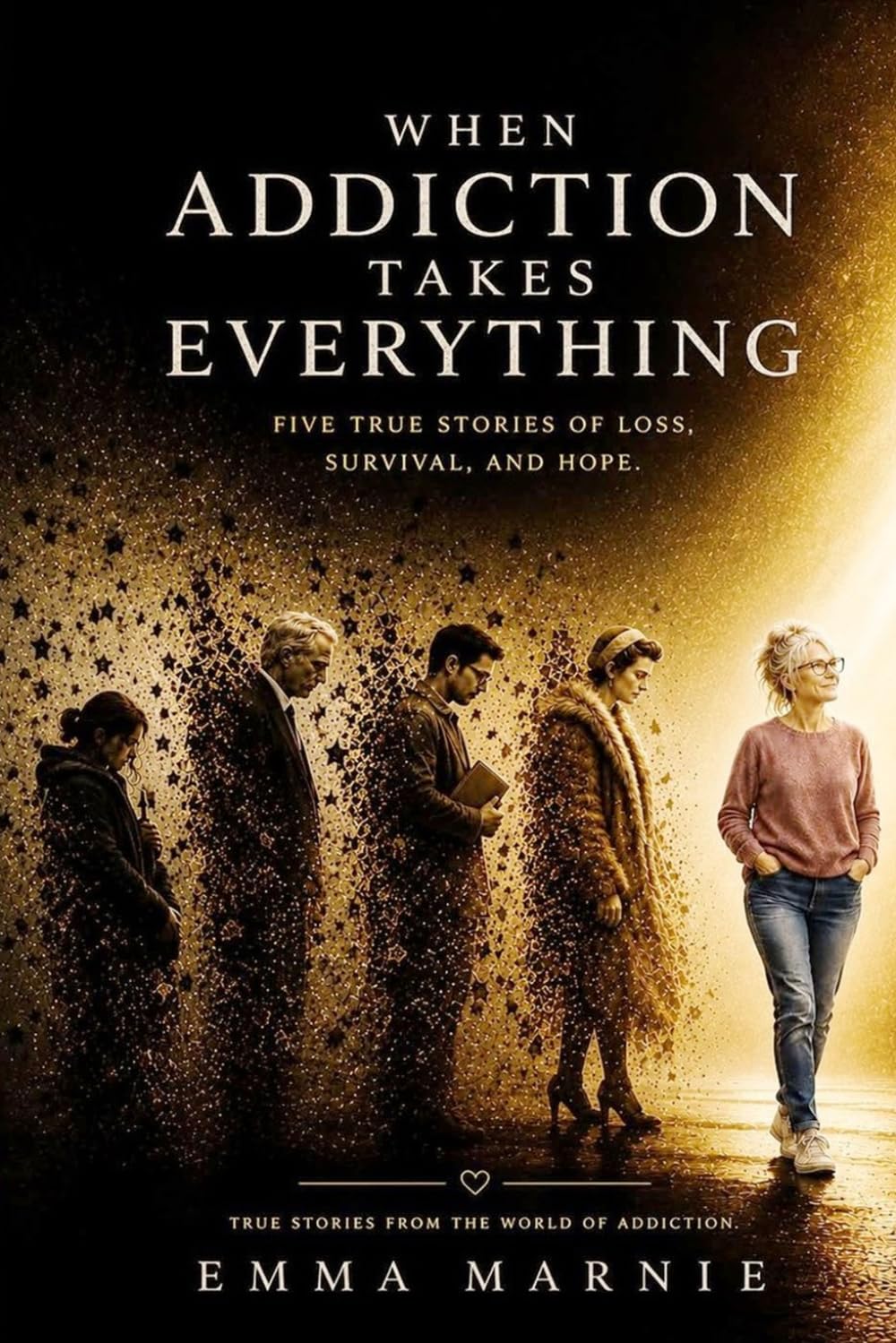
Read the full story
When Addiction Takes Everything
My honest account of alcoholism, consequences, survival and why the life built in recovery is worth protecting—even on the days when your head is being an arsehole.
View on Amazon UKStay for another one